




Blog / Chevy's Tires

2027 Chevy Equinox AWD and Drive Modes: What to Know for Pennsylvania Hills, Rain, and Winter Roads

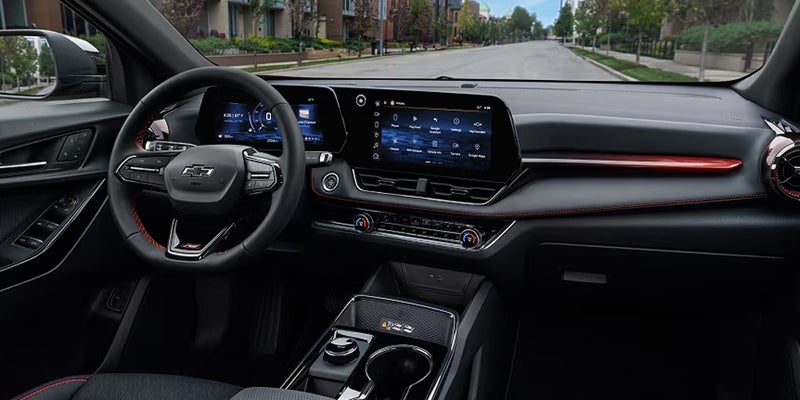
2027 Equinox Interior

A steep driveway, wet highway entrance, and snow-covered neighborhood street present different traction challenges. Available 2027 Chevy Equinox AWD and the standard Drive Mode Selector give drivers ways to adapt the gas-powered SUV to changing conditions.

However, selecting a mode does not create traction where the tires have little grip. Understanding what each setting changes—and what remains your responsibility—helps you evaluate an Equinox for driving around Washington, Pennsylvania.

Start With the Drivetrain Difference

The gas-powered 2027 Equinox offers front-wheel drive or available all-wheel drive. Both configurations pair a 1.5-liter turbocharged engine with an eight-speed automatic transmission. Earlier model-year information describing a front-wheel-drive CVT does not apply to the 2027 model.

Front-wheel drive delivers power to the front wheels. On an AWD-equipped Equinox, the system can also deliver power to the rear wheels when the appropriate mode is selected. This can help the vehicle accelerate on slippery surfaces, including during an uphill start.

As you compare Chevrolet Equinox inventory at Washington Chevrolet, confirm the drivetrain on the actual vehicle. Trim styling alone does not establish whether an Equinox has AWD.

Choose the Mode That Matches the Surface

Chevy Equinox drive modes are selected using the control on the center console. The available settings depend on the vehicle’s drivetrain and equipment.

  • Normal: Intended for everyday city and highway driving, balancing comfort and handling. Use it for routine driving when road conditions provide suitable traction.
  • Snow/Ice: Changes accelerator response to support smoother acceleration on slippery roads. On AWD-equipped models, it also engages AWD. Acceleration may feel less immediate on dry pavement.
  • AWD: On equipped vehicles, supplies drive torque to all four wheels. It is intended to improve traction on surfaces such as wet pavement, gravel, snow, or ice.
  • Off-Road: On equipped vehicles, adjusts traction control and stability-control operation and engages AWD for moderate-speed travel over surfaces such as dirt, grass, gravel, and unpaved roads.

Off-Road mode is not a general-purpose upgrade for every wet or snowy paved road. Match the setting to the surface and follow the owner’s manual. Ask your consultant to demonstrate the available selections and the indicator confirming which mode is active.

Use Smooth Inputs on Pennsylvania Hills

On a slippery uphill start, AWD can spread driving force across more tires instead of relying only on the front pair. Snow/Ice mode’s accelerator tuning can also help you apply power more progressively.

Still, pressing the accelerator harder is not a solution to limited grip. Use gentle acceleration and allow room ahead. A steep grade covered in ice may remain unsuitable to climb despite AWD.

Downhill travel requires a different approach. AWD does not shorten braking distances on ice. Reduce speed before the descent and leave additional following distance. The Equinox’s Automatic Engine Grade Braking can use transmission downshifts to help manage downhill speed, but it does not replace braking or careful speed selection.

Tires Remain Part of the Traction Decision

AWD and drive modes depend on the grip available at the tires. Worn tread, incorrect inflation, or tires poorly suited to the season can limit their usefulness.

For frequent winter driving, discuss dedicated winter tires. All-weather tires carrying the three-peak mountain snowflake symbol offer tested snow capability for year-round use, while conventional all-season tires generally balance everyday conditions with light-snow performance. Neither category guarantees traction on ice.

Ask about the tires fitted to the exact Equinox, including size, seasonal suitability, and replacement requirements for its drivetrain. An all-terrain tire should not automatically be treated as a winter tire.

Questions for Your Dealership Demonstration

  • Which drive modes does this exact Equinox offer?
  • How do I engage AWD and confirm that it is selected?
  • Which settings remain selected after restarting the vehicle?
  • Are there speed or operating restrictions when changing modes?
  • Which setting suits wet pavement versus an unpaved driveway?
  • Would the fitted tires suit my winter routes?

Schedule a test drive at Washington Chevrolet and describe your usual roads, driveway grade, and winter travel. A parked demonstration followed by a drive on an appropriate route can help you understand the controls without deliberately seeking slippery conditions.

Posted in:

Related Posts

Chevy's Tires

Why Your Chevy's Tires Wear Unevenly After a Western Pennsylvania Winter

Winter roads in Western Pennsylvania can be brutal on your Chevrolet. Between potholes, frost-heaved pavement, road salt, and repeated freeze-thaw cycles, it's not unusual for suspension and alignment components to take a beating. If your tires look like they're wearing unevenly after winter, your vehicle may be telling you it's time for service. Catching the problem early can improve handling, extend tire life, and help you avoid replacing a full set of tires sooner than expected. more Different Tire Wear Patterns Mean Different Things The way a tire wears often points directly to the underlying problem. Excessive wear along the inside or outside edge of the tread typically indicates the wheels are out of alignment. Center tread wear usually means the tires have been consistently overinflated, while excessive wear on both shoulders often points to underinflation. A scalloped or cupped tread pattern can indicate worn shocks or struts that allow the tire to bounce instead of maintaining consistent contact with the road. Feathering across the tread blocks may signal incorrect toe alignment. Identifying the wear pattern helps technicians diagnose the problem before it affects other steering or suspension components. How Winter Roads Affect Your Chevrolet It doesn't take a major impact to knock your alignment out of specification. Striking a deep pothole, clipping a curb hidden beneath snow, or repeatedly driving over rough pavement can gradually change wheel alignment. Even small changes in alignment angles can cause tires to scrub against the pavement instead of rolling smoothly. Over thousands of miles, that extra friction removes tread much faster than normal. Winter driving also places additional stress on ball joints, tie rods, bushings, and other suspension components that help keep your tires properly planted on the road. Why Tire Rotation and Wheel Alignment Work Together Rotating your tires at the recommended service interval helps distribute wear more evenly among all four tires. However, rotation alone won't solve an alignment problem. If the wheels remain out of specification, the newly rotated tires will begin wearing unevenly as well. During a Chevrolet tire service appointment, technicians can inspect tread depth, check tire pressure, evaluate suspension components, and measure wheel alignment to identify the root cause before additional damage occurs. Signs It's Time for Tire Service Your tires may need professional attention if you notice: Your steering wheel is no longer centered while driving straight. The vehicle pulls to one side. You feel vibration through the steering wheel at highway speeds. One or more tires show noticeably different tread wear. Road noise has increased compared to previous months. Addressing these symptoms early can improve ride quality while helping your tires reach their expected service life. Get Your Chevy Ready for Summer Driving in Washington, PA After months of winter driving, summer is an excellent time to have your tires, alignment, and suspension inspected. The certified service team at Washington Chevrolet can identify uneven tire wear, inspect steering and suspension components, perform wheel alignments when needed, and help maximize the life of your tires. Schedule your Chevrolet tire service today and head into the new season with confidence.

Chevy Silverado 1500

Which Chevy Silverado 1500 Setup Fits Your Life?

The 2026 Chevy Silverado 1500 is one of the most versatile trucks on the road today. So, if you're hauling equipment during the week, heading out on the weekend, or simply need a reliable vehicle, the Silverado 1500 gives you options in how you configure it. Understanding the cab styles, bed lengths, and available utility features can help you make a smarter decision before you ever step on foot a lot. more Choosing the Right Cab Style for the Chevy Silverado 1500 The Silverado 1500 comes in three cab configurations - Regular Cab, Double Cab, and Crew Cab. The Regular Cab is a solid choice if you spend most of your time working solo or with a single passenger. It keeps the truck's footprint shorter and leaves more flexibility when it comes to bed length. The Double Cab adds a small rear seat and rear-hinged back doors, making it a middle ground for drivers who occasionally need to bring a couple of extra people along. The Crew Cab offers the most rear passenger space, with four full-size doors and a comfortable back seat - ideal if you're regularly transporting a family or a full crew. Understanding Silverado 1500 Bed and Cab Options When it comes to Silverado 1500 bed and cab options, the bed length you choose matters just as much as the cab style. The Silverado 1500 is available with a Short Bed, a Standard Bed, and a Long Bed depending on the cab configuration you select. The approximately 70-in Short Bed pairs well with the Crew Cab and works great for drivers who prioritize cabin space and plan to use a trailer for larger loads. The Standard Bed is close to 80-in and balances interior room with cargo capacity, making it a popular choice. At just over 98-in, the Long Bed, typically paired with a Regular Cab, is the pick for those who regularly haul long materials like lumber or ladders without a trailer. Not all Silverado 1500 bed and cab options are available in every combination, so it's worth confirming availability when you shop. Utility Features That Make the Silverado 1500 Work Harder Beyond the structure itself, the Silverado 1500 is packed with features that enhance day-to-day practicality. The available EZ Lift-and-Lower tailgate makes loading and unloading easier on your back. Corner steps and bed steps help you get into bed without strain. Available LED cargo lighting helps you work after dark, while the Multi-Flex Tailgate - available on select trims - offers multiple positions for different loading needs. Power outlets in the bed and cabin keep your tools and devices charged on long days. Built-in trailering technology, including available in-vehicle trailering apps, helps take the guesswork out of hitching up and heading out. Tech and Connectivity Built for Busy Days The Silverado 1500 also comes well-equipped inside. A 13.4-in touchscreen keeps your navigation, audio, and phone connections easy to manage while you're on the move. Available Google built-in functionality, including Google Gemini, is now offered on select models, bringing AI-powered assistance directly to your dashboard. OnStar connectivity provides an added layer of safety and convenience, no matter if you're driving through town or out on a remote job site. Wireless charging, available Wi-Fi hotspot capability, and a range of driver assistance features round out the package for drivers who need to stay connected and focused. Find Your Silverado 1500 Near Washington, PA The right Chevy Silverado 1500 configuration for you depends on how you actually use your truck. From Silverado 1500 bed and cab options to onboard tech and trailering tools, the 2026 Silverado 1500 is built to handle whatever your week looks like. Come on in and see us at Washington Chevrolet so we can help you explore our available inventory, compare trim levels, and find the setup that fits your life.

tire balancing and wheel alignment

Tire Balancing vs. Alignment: What's the Difference?

Your vehicle has an interesting way of letting you know something isn't quite right. Sometimes the steering wheel starts to shake on the highway. Other times it drifts toward the shoulder like it has somewhere else to be. Those two symptoms often point to two completely different services: tire balancing and wheel alignment. They sound similar, but they solve different problems, and knowing the difference can save both your tires and your wallet. Tire Balancing Keeps Things Running Smoothly Think of a tire like a washing machine during the spin cycle. If the weight isn't evenly distributed, things start wobbling in a hurry. That's exactly what happens when a tire and wheel assembly falls out of balance. At lower speeds you may never notice it. Get onto the highway, though, and the steering wheel can begin vibrating enough to remind you something isn't happy. During a tire balancing service, each wheel is placed on a balancing machine that identifies heavier areas. Small wheel weights are then installed to restore even weight distribution. It's a relatively quick service, and one that's commonly performed during tire rotations, after installing new tires, or any time vibration develops. Wheel Alignment Is About Direction A tire alignment service has nothing to do with balancing weight. Instead, technicians adjust the suspension angles, so each tire meets the road the way the engineers intended. Settings such as camber, caster, and toe all influence how the vehicle tracks and how evenly the tires wear. Hit a pothole hard enough or introduce your wheel to an unforgiving curb, and those settings can shift. The result is usually a vehicle that pulls left or right, along with tires that wear much faster on one edge than the other. Which One Does Your Vehicle Need? Fortunately, your vehicle usually provides a few clues. If the steering wheel vibrates, especially at highway speed, tire balancing is often the first place to look. If the vehicle refuses to travel in a straight line or the tire tread is wearing unevenly, an alignment inspection is the better starting point. Occasionally, both services are needed, particularly after replacing tires or suspension components. Addressing both at the same visit helps restore ride quality and maximize tire life. Routine Tire Service Pays Off Properly balanced tires and accurate alignment settings do more than improve comfort. They help tires wear evenly, improve handling, and reduce unnecessary strain on suspension components. That translates into longer tire life and a vehicle that's simply more enjoyable to drive every day. If you're searching for Chevrolet tire service, wheel alignment, or tire balancing near Washington, PA, regular inspections can help catch small concerns before they become expensive ones. Visit Washington Chevrolet for Tire Service If your steering wheel has started shaking, your vehicle pulls to one side, or your tires are wearing unevenly, now is an excellent time for a professional inspection. Visit is, serving Washington, PA, or schedule your tire service appointment online. Our factory-trained technicians can determine if your Chevrolet needs balancing, alignment, or both, helping keep every mile smooth, predictable, and ready for whatever road comes next.